 socmedb.com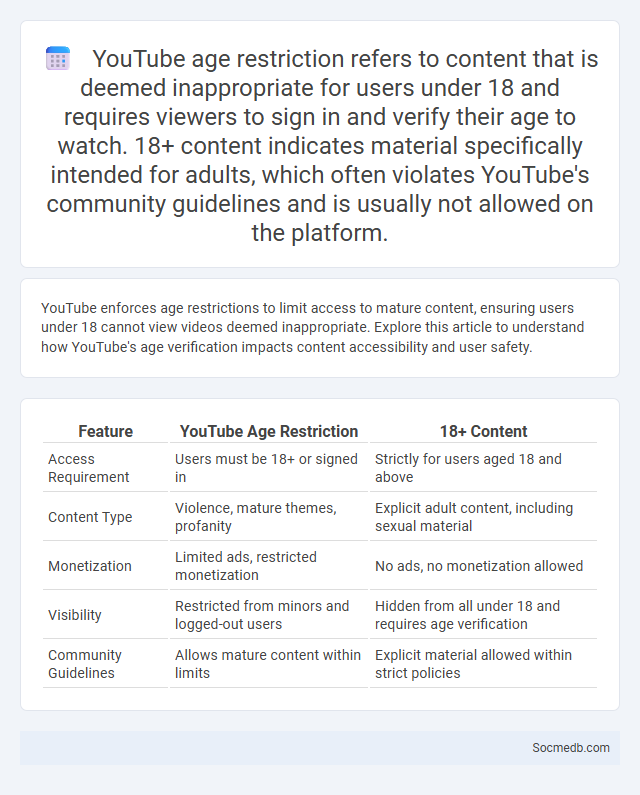
Photo illustration: YouTube age restriction vs 18+ content
YouTube enforces age restrictions to limit access to mature content, ensuring users under 18 cannot view videos deemed inappropriate. Explore this article to understand how YouTube's age verification impacts content accessibility and user safety.
Table of Comparison
| Feature | YouTube Age Restriction | 18+ Content |
|---|---|---|
| Access Requirement | Users must be 18+ or signed in | Strictly for users aged 18 and above |
| Content Type | Violence, mature themes, profanity | Explicit adult content, including sexual material |
| Monetization | Limited ads, restricted monetization | No ads, no monetization allowed |
| Visibility | Restricted from minors and logged-out users | Hidden from all under 18 and requires age verification |
| Community Guidelines | Allows mature content within limits | Explicit material allowed within strict policies |
Understanding YouTube Age Restrictions
YouTube age restrictions are designed to limit access to content unsuitable for viewers under 18, ensuring compliance with legal and community standards. These restrictions are enforced by automated systems and manual reviews, which assess videos based on explicit content, violence, or harmful behavior. Users must verify their age through signing in, preventing underage users from viewing restricted videos and promoting a safer platform environment.
What Qualifies as 18+ Content on YouTube
18+ content on YouTube includes videos that feature explicit sexual material, graphic violence, or strong language unsuitable for minors. Your uploads must comply with YouTube's community guidelines, which restrict adult themes to protect younger viewers. Violating these rules can lead to age restrictions or removal of the content to maintain a safe platform environment.
Differences Between Age-Restricted and 18+ Content
Age-restricted content on social media platforms typically limits visibility or interaction to users above a certain age, often 13 or 16, to comply with child protection laws and platform policies. In contrast, 18+ content specifically targets adults, encompassing explicit material, gambling, or substances like alcohol and tobacco, with stricter verification processes and legal regulations. These distinctions impact content moderation strategies, user access controls, and legal liabilities for platforms operating globally.
How YouTube Enforces Age Restrictions
YouTube enforces age restrictions by requiring users to sign in with a verified Google account confirming they meet the minimum age requirement of 13 years old. The platform employs machine learning algorithms and human reviewers to identify and flag age-restricted content, limiting its visibility to younger audiences. Users who attempt to access restricted videos without proper verification are prompted to submit proof of age or are outright blocked from viewing the content.
Impact of Age Restriction on Video Monetization
Age restrictions on social media videos significantly influence monetization potential by limiting audience reach and advertiser interest. When your content is flagged with age restrictions, fewer advertisers are willing to bid on ad placements, leading to reduced revenue opportunities. Understanding these impacts allows you to tailor your content strategy to maximize monetization while complying with platform policies.
Viewer Experience: Age-Restricted vs 18+ Content
Age-restricted and 18+ content on social media platforms significantly impact viewer experience by controlling access based on legal age requirements, ensuring compliance with platform policies and safeguarding minors. You may encounter varying levels of content visibility, with stricter restrictions on 18+ content to prevent underage users from viewing sensitive or explicit material. This differentiation enhances user safety and promotes responsible content consumption while maintaining engagement within appropriate age groups.
Content Creators: Navigating Age Policies
Social media platforms enforce age policies to protect younger users and ensure content appropriateness, which significantly impacts content creators navigating these rules. Compliance with age regulations is essential for you to maintain your account's credibility, avoid suspensions, and reach the intended audience effectively. Understanding platform-specific age restrictions and implementing age-appropriate content strategies enhances your ability to grow and engage authentically within community guidelines.
Avoiding Unintentional Age Restrictions
Ensuring your social media content does not unintentionally impose age restrictions is crucial for maintaining broad accessibility and compliance with platform guidelines. You should carefully review privacy settings, content labels, and advertising parameters to avoid limiting your audience inadvertently. Implementing clear age-appropriate design practices helps protect younger users while maximizing engagement across diverse age groups.
Legal and Policy Implications of 18+ Labelling
Legal and policy implications of 18+ labeling on social media platforms involve stringent compliance with age-restriction laws such as COPPA and GDPR-K, aimed at protecting minors from inappropriate content. Platforms must implement robust age verification mechanisms and content moderation policies to mitigate liability risks and adhere to digital content safety regulations. Failure to enforce age-based labeling can result in significant legal penalties, reputational damage, and heightened regulatory scrutiny.
Tips for Safely Uploading Sensitive Content on YouTube
Protecting your privacy when uploading sensitive content on YouTube requires reviewing your video settings to enable privacy options such as unlisted or private mode. Use strong, unique passwords and enable two-factor authentication on your YouTube account to prevent unauthorized access. You should also carefully edit or blur any personal information within the video before uploading to safeguard your identity effectively.